
"wild flavor profile"
400 article(s) found

A brief introduction to the history and culture of the origin and development of fine coffee beans
Ninety Plus thought that coffee itself is a kind of fruit, so he made his own exclusive treatment according to taste (W2), (H2), and (N2). When you understand traditional coffee processing, you will find that a small amount of adjustment can blur the distinction between them. For example, a little water washing can be added at different stages of the densification process to achieve a lighter and brighter washing taste; after controlling the fruit

A brief introduction to the Market Price of Ethiopian Fine Sidamo Coffee varieties
The highest grades of Ethiopian washed coffee Yega Chuefei G1 G2 Sidamo (Yirgacheffe, Sidamo) are Grade 2 and Grade 3 (G2, G3), while most of the sun-processed coffee in eastern Ethiopia are Grade 4 or Grade 5 (G4, G5). In many cases, level 4 coffee is marked as level 5 in order to reduce taxes. At present, the grading is not uniform and messy, because there is also sun processing.

Ethiopian Rose Summer Village Manor Brand-CHAKA_ Rose Summer Village Garden what's the taste of Rose Summer?
Professional coffee knowledge exchange more coffee bean information please follow Coffee Workshop (Wechat official account cafe_style) New production season Ethiopian Coffee Rosia Village Manor CHAKA Rosia Village Manor-Sun Origin: Ethiopia / production area: Banchimaji Bench Maji / altitude: 19112001 m / Coffee species: Gori Gesha / Post processing: Nature Day

A brief introduction to the main producing areas of delicious Ethiopian coffee
Hara (Harar) / Solar or dried (Sundried/Dry-Processed) Hara is located in the Eastern Highlands of Ethiopia (Harerge Province) and grows between 5000 and 7000 feet above sea level. It was still wild on slopes a century ago. Most of the raw beans are medium size and have long tips at both ends, with a yellowish or golden green color and strong chocolate when baking.

Boutique coffee recommendation: a brief introduction to the quality of different brands of Kopi Luwak
Kopi Luwak (Kopi Luwak), refers to the musk cat feces out of coffee beans made of coffee, Kopi Luwak is a kind of coffee, not a brand. There are many different brands, quality and prices of Kopi Luwak, how to choose? Different varieties of coffee trees produce coffee with different flavors and grades. Coffee farmers' treatment, origin, soil and gas

What are the characteristics of African coffee A brief introduction to the characteristics of coffee beans in different parts of Africa
Professional coffee knowledge exchange more coffee bean information please follow the coffee workshop (Wechat official account cafe_style) front street-African coffee producing country Kenya coffee grade profile coffee producing countries more than 1x3 countries around the world produce coffee, most of which are located between the Tropic of Cancer. The types of coffee produced in each country are different, and some regions have their own unique characteristics.
A brief introduction to the main producing areas of coffee beans in Ethiopia
Hara (Harar) / Solar or dried (Sundried/Dry-Processed) Hara is located in the Eastern Highlands of Ethiopia (Harerge Province) and grows between 5000 and 7000 feet above sea level. It was still wild on slopes a century ago. Most of the raw beans are medium size and have long tips at both ends, with a yellowish or golden green color and strong chocolate when baking.

Wang ze world coffee brewing competition Chinese translation barista brewing competition previous champions
It has been a month since the 2017 World Coffee Brewing Competition, and many friends have asked the champion Wang ce's lines (and Chinese translation) backstage, so to make a long story short, here it comes. This article due to technical reasons can not be attached to the game video, if you need reference, please go to Tencent Video search: Wang ce match. The pictures of this article are all taken.
How much is the boutique Kopi Luwak how much is a jin of delicious Indonesian Kopi Luwak characteristics of Blue Mountain Coffee
Muscat Coffee Editor synonym Kopi Luwak generally refers to civet coffee (Kopi Luwak), produced in Indonesia. It is one of the most expensive coffee in the world, with a price of several hundred dollars per pound. It is extracted from the feces of the civet and processed. The civet eats the ripe coffee fruit, which is excreted through the digestive system and passed through the stomach.
Features of Mandolin Coffee Mandolin Coffee Practices Mandolin Coffee Introduction
Mantelin is a premium coffee bean grown in the plateau mountains at 750 - 1500 meters above sea level, with Takengon and Sidikalang producing the highest quality mantelin. Due to the irreplaceable mellow flavor of Mantenin, UCC Ueshima Coffee, Japan's largest coffee company, teamed up with PT Gunung Lintong, a famous coffee merchant in Sumatra, to run their first coffee in Asia in 1995.

A brief introduction to the history and culture of the origin and development of high-quality coffee and beans
About the way of handling: W2TH2MagneN2: it can be understood as the traditional way of handling raw beans, and ninety + also regards them as the distinction of taste. Ninety Plus thought that coffee itself is a kind of fruit, so he made his own exclusive treatment according to taste (W2), (H2), and (N2). When you understand the traditional coffee processing, you will find that a small amount of adjustment can make them.
How much is the price of cat shit coffee beans? a brief introduction of cat shit coffee beans per jin.
Kopi Luwak is made in Indonesia. In the early 18th century, the Dutch established coffee plantations in the Indonesian colonies of Sumatra and Java, and banned locals from picking and eating their own coffee fruits. Indonesian locals inadvertently found that civets love to eat these coffee fruits and will drain the beans intact when defecating. The civet can only pick the most familiar.

A brief introduction to the History of Coffee flavors in Guatemala
Guatemalan coffee is produced in the The Republic of Guatemala countries of northwestern Central America. The country's mountain forest area accounts for 2/3 of the national area, rich in high-quality coffee beans, its strong sour taste, mellow taste and slightly wild, can be used as a single drink or for the preparation of comprehensive coffee. History of Guatemalan Coffee: a cup of Guatemalan Antigua coffee, like

Yega Coffee Cochel G1 washed coffee beans will smell of jasmine, lemon and citrus when boiled.
Description of taste and flavor of Jejafe Cochel G1 introduction to sunbathing [product name]: Ethiopia Ethiopia Yirgacheffe [quality grading]: WP Grade 2 [baking degree]: recommended baking degree moderate baking (Medium Roast or City Roast) [grade]: excellent [granules]: ★ full [acidity]: ★

The most petty bourgeois cafe in Hangzhou, literary and artistic youth should not miss it.
The big is faint in the city, the small is faint in the wild, often can let the heart rest in the place, is not so easy to encounter. It may also be on a romantic corner, but it won't be the noisy streets you often pass by. Maybe as long as you take a slight turn in a busy place, maybe you have to go through a long roadway, or you really have to stay away from the city. Anyway, those must be a bit of a petty bourgeoisie.

Ethiopia Coffee bulk Commercial Bean producing area: Gima 06
Altitude: 1350-1850 m forest / semi-forest system harvest time: November-January of the following year Gima is located in the southwestern highlands of Egypt (at the junction of Kaffa and Illubabor provinces), with an elevation of 4400-6000 feet, it is the largest coffee-producing area in Egypt, accounting for 3% of exports. The fine JIMA washed in water does not have the orange fragrance and flower rhyme of Yega Xuefei, but the taste spectrum is also quite clean and clear.

A brief introduction to the cultivation of Bankimaji boutique coffee beans, climate and altitude
Yemeni (Yemen) aroma 4, brightness 4, mellow, 3 flavors, 4.5 aftertaste, 5 points suitable for baking: City/Full city from city to full city is suitable, light baking will highlight the western flavor and spice, while deeper baking will make dark chocolate and smoky taste obvious, at the same time, the taste will be more intense. It should be noted that because the beans are relatively small, plus the size of the particles is quite large.
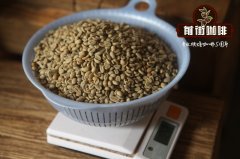
Ninety plus 90+ Company history
Ninety plus is an internationally renowned coffee bean production and marketing company and is known worldwide for providing rare and unique green coffee beans. In addition to direct cooperation with coffee farmers, Panama has 134 hectares of coffee plantations. Since its inception in 2007, customers have spread to more than 40 countries around the world. Joseph Brodsky founded Ninety Plu in 2007.

Introduction to boutique coffee manor: Bali garden bean boutique Robeste beans in detail
Although Balinese coffee is a member of Indonesian coffee, coffee farmers in Bali feel that the quality of Indonesian coffee is uneven and does not match the high-quality coffee quality of Bali, so they set up their own doors and call themselves Balinese coffee to show the difference between Indonesian coffee and Indonesian coffee. There are not only Arabica coffee beans but also Robbins coffee in Bali. The protagonist of this article is

What are the characteristics of Ethiopian coffee? Common coffee beans
Professional coffee knowledge exchange More coffee bean information Please pay attention to coffee workshop (Weixin Official Accounts cafe_style) Front Street-Ethiopian coffee, common coffee varieties Ethiopia has unique natural conditions, suitable for planting all imaginable coffee varieties. Ethiopia's coffee beans are mainly grown as highland crops at altitudes between 1 and 1 above sea level.